
How altitude, climate, and a single species of wild rose produce the world's most sought-after facial oil.
Rosa rubiginosa — the sweet briar rose — is a thorny, invasive shrub that grows wild across the foothills and valleys of southern Chile, between 800 and 2,400 metres above sea level. It was introduced to South America by European settlers in the 19th century and has since colonised vast stretches of the Andean landscape. It is, botanically speaking, a weed. It is also the source of the finest rosehip seed oil in the world.
Why Chile, and why this species
The quality of rosehip oil is determined by its trans-retinoic acid content — a naturally occurring form of vitamin A that is responsible for the oil's well-documented effects on skin cell turnover and hyperpigmentation. Rosa rubiginosa grown at altitude in the Chilean Andes consistently produces seeds with higher trans-retinoic acid concentrations than the same species grown at lower elevations or in other climates. The combination of high UV exposure, significant diurnal temperature variation, and well-drained volcanic soils appears to stress the plant in ways that increase its bioactive compound production.
The plant is under stress at altitude. That stress is precisely what makes the oil worth using.
The harvest
Rosehips are harvested in late autumn — April and May in the southern hemisphere — when the fruit has fully ripened and turned deep red. The harvest is done by hand. The thorny nature of the shrub makes mechanical harvesting impractical, and the wild-growing habit of the plants means they are spread across steep, rocky terrain that is inaccessible to machinery. Harvesting cooperatives in the Bío-Bío and Araucanía regions employ seasonal workers who have been harvesting these plants for generations.
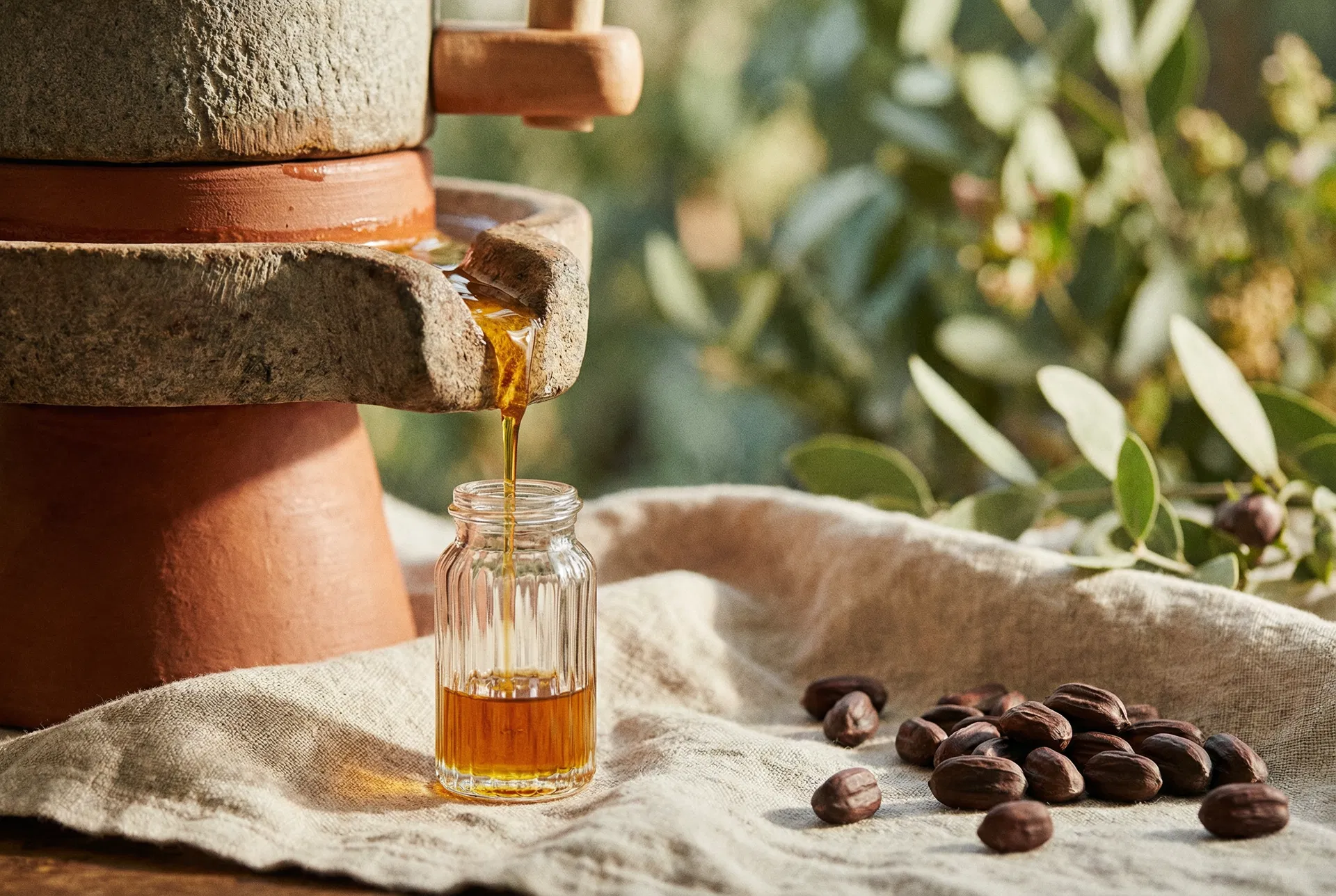
After harvest, the hips are dried and the seeds are separated from the flesh. The seeds are the source of the oil — the flesh, which is high in vitamin C, is used separately for food and supplement production. The dried seeds are then cold-pressed within weeks of harvest to minimise oxidation of the unsaturated fatty acids before the oil is sealed in amber glass.
What makes our rosehip different
- Wild-harvested Rosa rubiginosa — not cultivated. Wild plants produce higher bioactive concentrations than farmed equivalents.
- Altitude sourcing — all fruit sourced from above 1,200m elevation for maximum trans-retinoic acid content.
- Hand-harvested — no mechanical processing that would damage the delicate fruit before pressing.
- Pressed within 6 weeks of harvest — minimises pre-press oxidation.
- Unrefined — no bleaching, deodorisation, or refining after pressing. The amber-red colour and earthy scent are intact.
The oil you receive is the direct result of a specific plant, in a specific place, harvested at a specific time of year. That traceability is not a marketing claim. It is the reason the oil works.