
Why the most stable 'oil' in your skincare routine is technically a liquid wax — and why that distinction matters.
Every carrier oil in our range is, chemically speaking, a triglyceride — a glycerol molecule bonded to three fatty acid chains. Rosehip, shea, prickly pear — all triglycerides. Jojoba is not. Jojoba is a liquid wax: a mixture of long-chain fatty acids bonded to long-chain fatty alcohols in ester linkages. This is not a minor technical distinction. It is the reason jojoba behaves differently from every other botanical oil in your routine.
The structural difference and why it matters
Triglyceride oils are susceptible to oxidative rancidity. The double bonds in their unsaturated fatty acid chains react with oxygen over time, producing aldehydes and ketones that smell unpleasant and can irritate skin. This is why most carrier oils have a limited shelf life — typically 12 to 24 months — and why they are often stored in amber glass away from heat and light.
Wax esters are structurally different. The ester bond in jojoba is more resistant to oxidation than the double bonds in triglyceride fatty acids. This gives jojoba an exceptional shelf life — properly stored, it remains stable for 5 years or more without rancidity. It also means jojoba does not go off in the same way that rosehip or hemp seed oil does, making it one of the few carrier oils suitable for use in products without added antioxidants.
The sebum your skin produces is also a wax ester. Jojoba is the only plant-derived ingredient that shares this molecular structure.
The sebum connection
Human sebum — the oil produced by your sebaceous glands — is approximately 25% wax esters. The wax esters in sebum are structurally similar to those in jojoba. This is why jojoba is often described as 'skin-identical' or 'sebum-mimicking'. It is not a metaphor. The molecular similarity means jojoba integrates into the skin's lipid layer more readily than triglyceride oils, which is why it absorbs quickly without leaving a greasy residue.
This structural similarity also has implications for acne-prone skin. Jojoba's wax esters can help regulate sebum production by signalling to the sebaceous glands that the skin's lipid barrier is adequately maintained — reducing the overproduction of sebum that contributes to blocked pores. This is why jojoba is one of the few carrier oils consistently recommended for oily and combination skin types.
How to use jojoba effectively
- As a standalone facial oil — apply 3–4 drops to damp skin after cleansing. The wax ester structure absorbs quickly without occlusion.
- As a carrier for essential oils — jojoba's stability makes it ideal for diluting essential oils in leave-on products. It will not go rancid and compromise the blend.
- As a makeup remover — the wax ester structure dissolves sebum-based makeup effectively. Apply to dry skin, massage, then remove with a warm cloth.
- As a scalp treatment — jojoba's sebum-mimicking properties make it effective for dry scalp conditions. Apply to the scalp, leave for 30 minutes, then shampoo.
- For all skin types — unlike many carrier oils, jojoba is genuinely suitable for oily, dry, combination, and sensitive skin without modification.
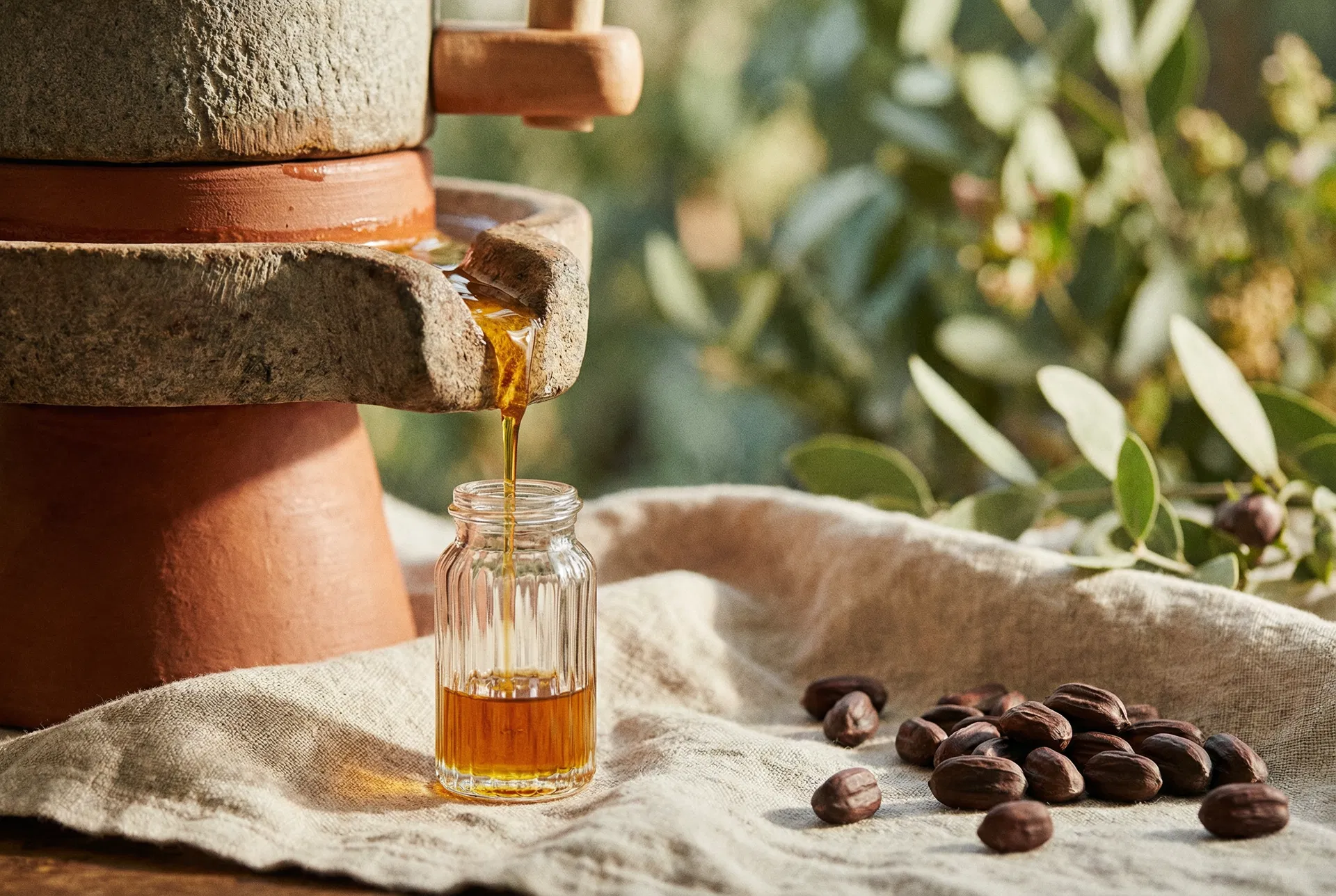
Our golden jojoba is cold-pressed from Simmondsia chinensis seeds grown in the Sonoran Desert of Arizona — the native habitat of the plant. Desert-grown jojoba produces a higher wax ester concentration than irrigated, cultivated equivalents. The golden colour comes from the natural tocopherols in the unrefined oil. Refined jojoba is colourless. Ours is not.